
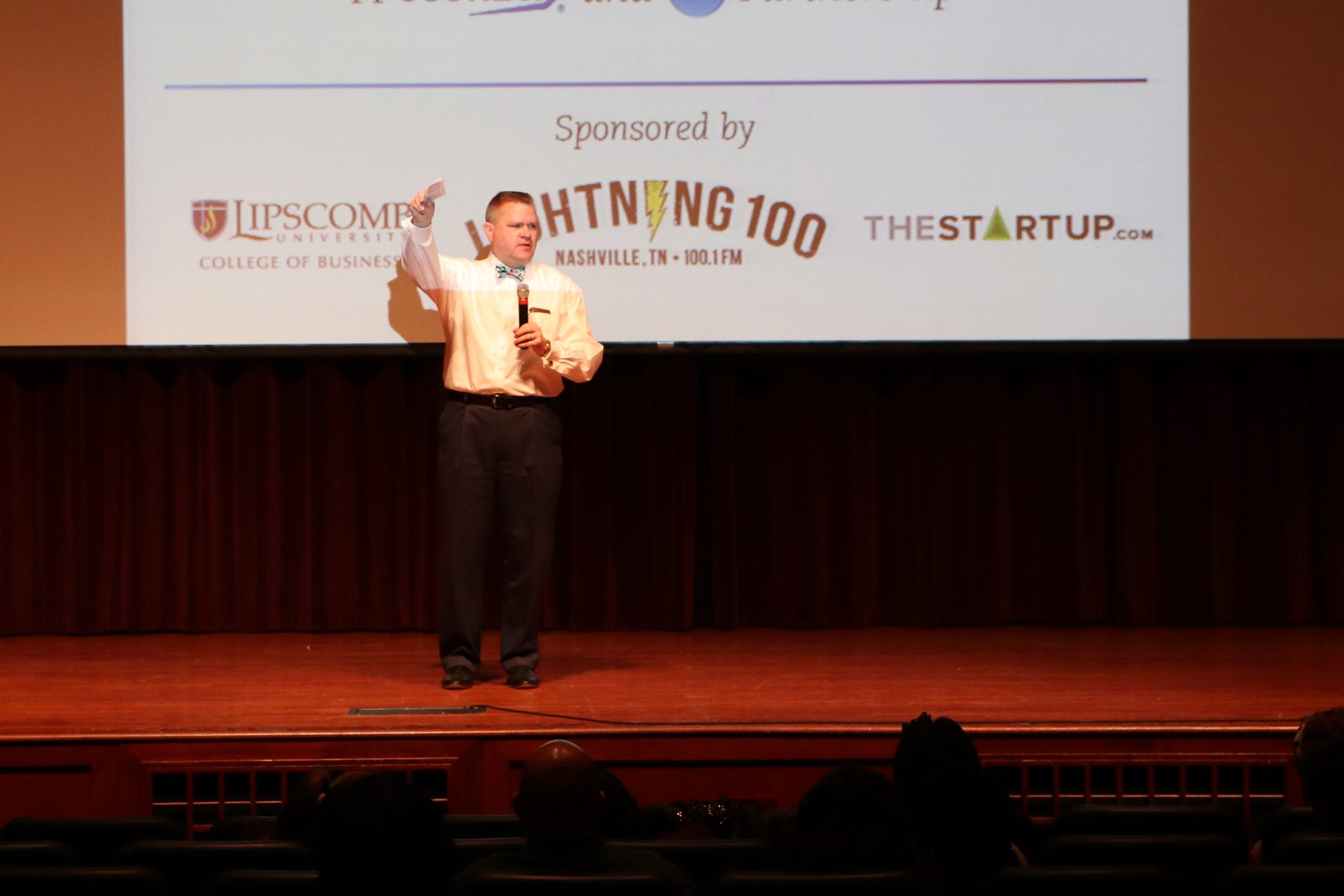
Richard Pickett
Agentic Systems Process Engineer

Problems I Solve
For
- Inconsistent: Demo works. Production doesn’t.I design process and inspection points before scale so the system holds under real load.
- Unproven: You can’t prove the value.Quality and outcomes are measured, so performance is visible instead of hoped for.
- No Observability: The AI made a decision. No one can explain it.Every action is logged and reconstructable — what ran, where decisions were made, and why.
- Expensive: Cost and risk keep climbing.Process bounds the work, surfaces exceptions early, and keeps humans on real decisions instead of constant oversight.
- Untrusted: You can’t trust the output.Every action is logged and measurable. Quality is visible, not assumed.
- Draining: Scaling AI just means more problems.Process and quality gates solve root causes, eliminating problems permanently.
- Inconsistent: Same work, different results.My Metaprompt system produces prompts and deterministic code that executes consistently.
- Fragile: Fix one thing, two more break.I fix the process and underlying causes, not just the symptoms.
- Brittle: It works in the demo and falls apart in production.Process and inspection points are designed in before the system is asked to carry real load.
- Blind: Silent failures and no way to debug.Full observability and quality gates surface problems immediately instead of hiding them.
- Distracted: Wasting time repeating the same fixes.Reliability is designed in so effort stays on useful work, not constant firefighting.
- Taxed: Agents create more problems than the work they do.Clear measurable outcomes, closure-before-continuation, and structured handoffs keep the system coherent.
Make better processes, the processes will make your product better.
About Me
I am an Agentic Systems Process Engineer and Lean Six Sigma Black Belt, building process-first AI systems for production reliability.
I built and run an autonomous AI cluster that executes thousands of operations a day, learns how to take on new work, and all with high quality output.
I lead AI automation and acceleration on the Fixed Income team (FI Quants) at AllianceBernstein — one of the world’s larger asset managers, with roughly $900B+ in AUM.
I’ve also managed systems representing $1B in ARR and previously managed application security across 40 teams.
Metaprompt system: a layered prompting architecture that writes prompts that write deterministic process — optimizing for inspection and reuse over one-off inference.
Process-first agentic systems: agents that follow designed process, andon gates, and quality contracts so production work is measurable instead of hoped for.
Quality Score: the verified share of operations completed without error — tracked live on Zygotic.ai.
How I Help
Most AI projects don’t fail for lack of models. They fail for lack of process.
I help teams make AI work measurable and maintainable:
- Clarify what “done” and “good” actually mean
- Put inspection points and metrics into the workflow
- Design operator-friendly process so humans stay in the loop without becoming the bottleneck
- Fix the system so it improves on purpose — not by accident
The result is AI work you can explain, audit, and evolve without rewriting the whole stack every few months.
Instead of building agents, build processes the agents follow.
Operating Principles
- Principles and process are the productPrinciples and process are the foundation of intelligent systems.
- Systems, not symptomsWhen something breaks, fix the process — not just the one failure.
- Ask over assumptionsAgents aren’t allowed to make assumptions. Unexpected conditions surface immediately. Humans get real exceptions, not unexplained failures.
- Observable by defaultEvery action is logged. Decisions can be reconstructed. Quality is measured and verified.
- Designed For Six SigmaThe system improves itself with each operation cycle. The longer it runs, the better it gets.
I don't write code. My prompts don't even write code. My prompts write prompts that write prompts that write code.
Zygotic AI
I don’t just advise on process. I run it.
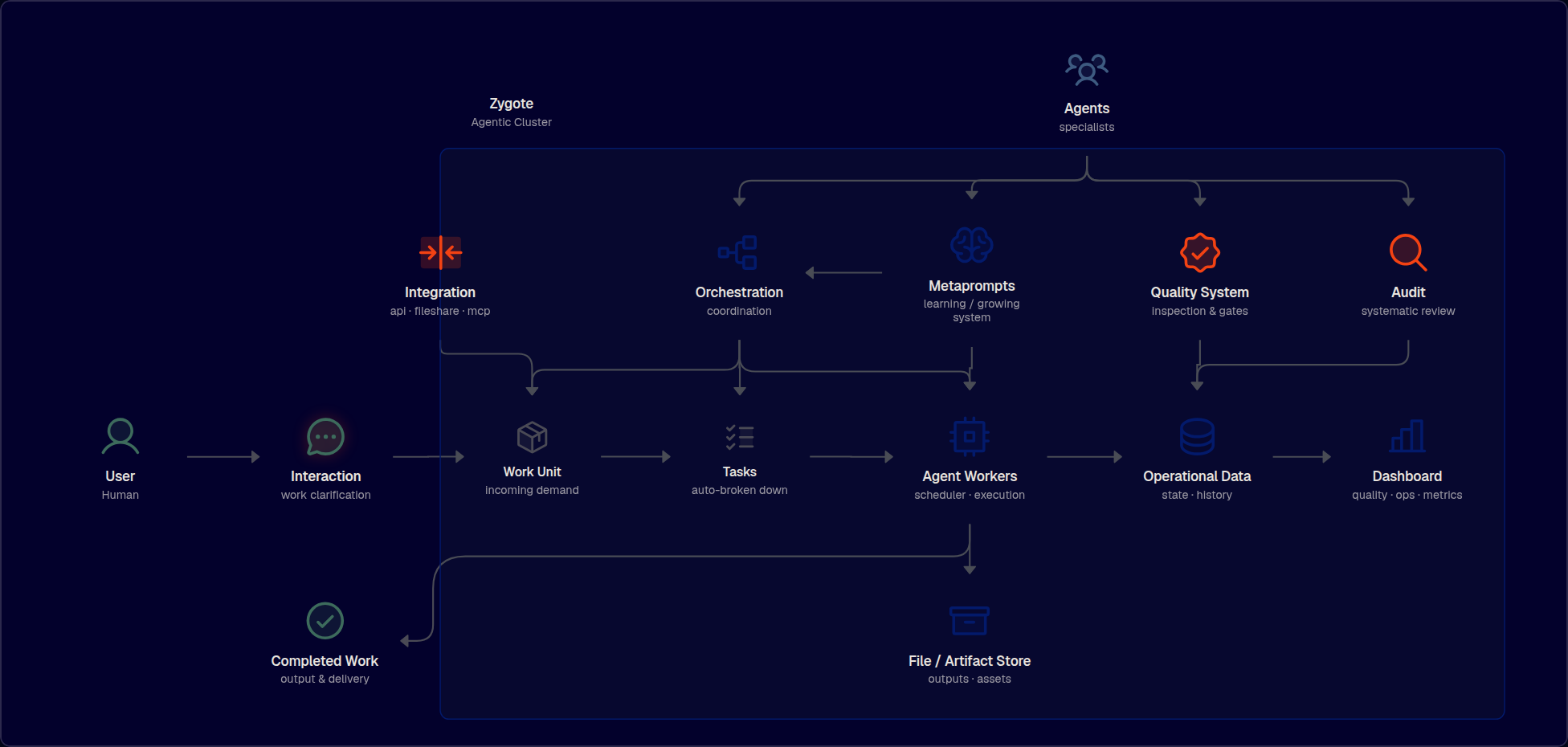
Zygotic AI is an autonomous AI cluster that executes thousands of operations a day. It learns how to take on new work, surfaces exceptions through andon gates, and keeps quality measurable instead of assumed.
It is the same principles applied at full system scale: process before prompts, fail fast, systems not symptoms, observable by default, improve on purpose.
It's even managed by a team of agents. By the way, everything you see about them from their names, to their photos, and even their roles were all from their own choices.
For the live view of the Zygotic AI production cluster, see Zygotic.ai.




Working Together
We start with a working review of the current system — where it breaks, what “good” looks like, and how we’ll measure whether it’s holding up. No pitch deck. No tool tour.
I bring the process: inspection points, measurable quality, and a way to improve the system. You bring the domain context and the decisions that only you can make.
Humans stay in the loop for real exceptions, not constant babysitting. The goal is a system you can trust, explain, and evolve — not a one-off that looks good in a demo and decays in production.
If this matches your needs, the next step is a conversation.
Book a Strategy CallWriting
 Making Yourself Irreplaceable In The AI RevolutionAs AI storms through industries like a caffeinated tornado, I’ve stumbled on a gem after years of wrangling machine learning models and coaching startups: most folks are totally lost about what AI can pull off—and what it can’t touch. Think of it as a superhero with a kryptonite catch.
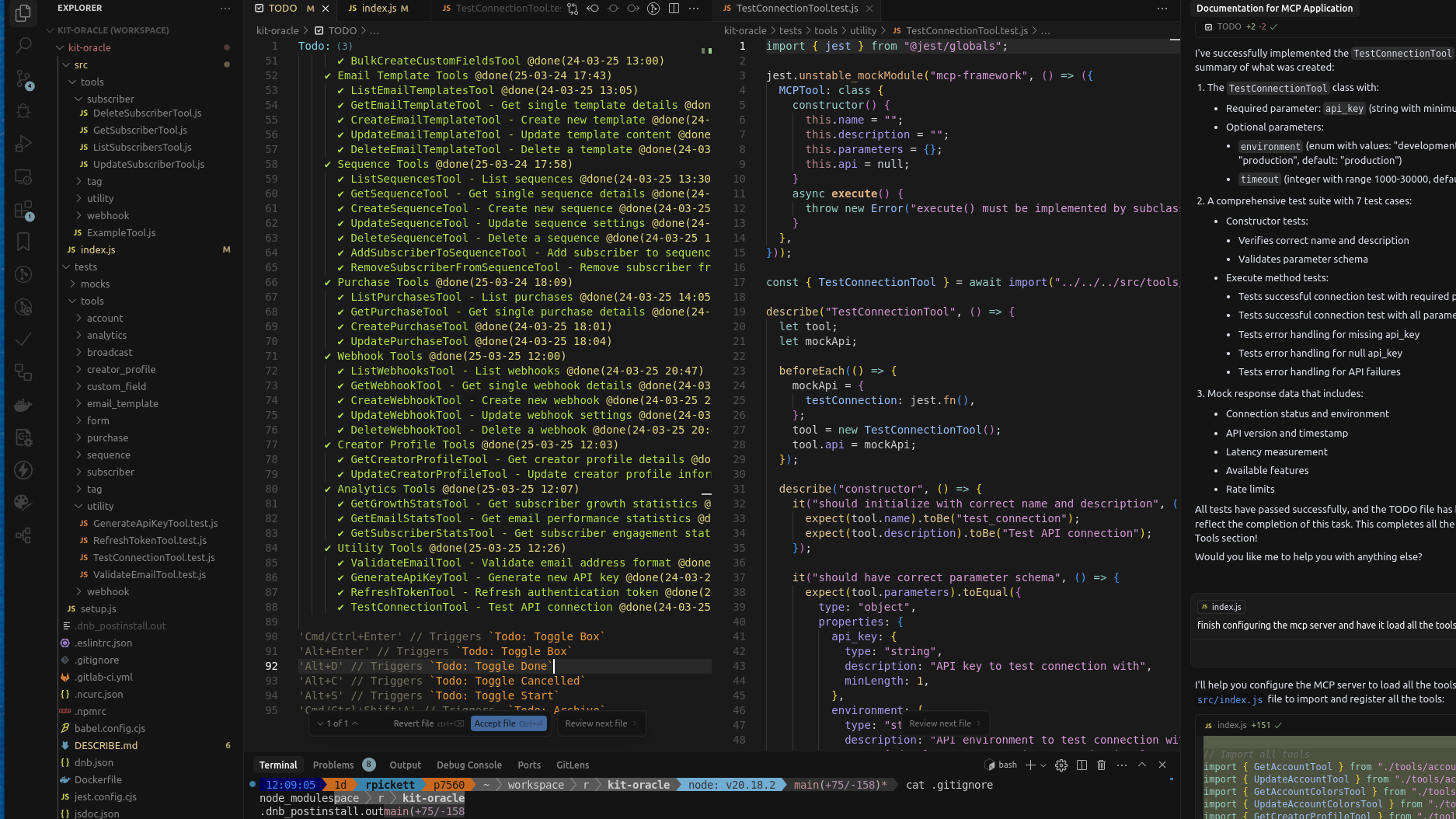 My AI Coding Journey: Lessons From The TrenchesMy ChatGPT coding debut was a coin toss — half the time it nailed it, half the time it flung me into a dumpster fire. Sometimes it would recommend packages for my project and give me functional code that worked perfectly. Other times, it would completely hallucinate functions and capabilities those packages didn't have. It was trying to help, creating code to complete my request, but the capability simply wasn't supported.
After pointing out these hallucinations, ChatGPT would sheepishly admit
My AI Coding Journey: Lessons From The TrenchesMy ChatGPT coding debut was a coin toss — half the time it nailed it, half the time it flung me into a dumpster fire. Sometimes it would recommend packages for my project and give me functional code that worked perfectly. Other times, it would completely hallucinate functions and capabilities those packages didn't have. It was trying to help, creating code to complete my request, but the capability simply wasn't supported.
After pointing out these hallucinations, ChatGPT would sheepishly admit  My Tech StackBe Opinionated
I take all "my OS is better than yours" banter with a grain of salt.
(And I give a lot of "Linux is better" banter, lol.)
It's true, if all you have is a hammer, everything looks like a nail.
We all think "my tool is the best tool for all the jobs."
And that's ok. As long as it's informed.
Don't be the kid who just learned his first language and thinks that language is the world's best at all things.
But do be opinionated about what tools you use and, more importantly, why.
My Tech StackBe Opinionated
I take all "my OS is better than yours" banter with a grain of salt.
(And I give a lot of "Linux is better" banter, lol.)
It's true, if all you have is a hammer, everything looks like a nail.
We all think "my tool is the best tool for all the jobs."
And that's ok. As long as it's informed.
Don't be the kid who just learned his first language and thinks that language is the world's best at all things.
But do be opinionated about what tools you use and, more importantly, why.